Translocation Away from Trouble

NPL-27; photo taken from trail camera.

The rainy season has brought new challenges to the lions and Lion Rangers in northwest Namibia. As game have dispersed across the area, lions have followed prey species, bringing them into different areas and into contact with livestock and farmers. One particular challenge has concerned a male lion, NPL-27, first collared by the Namibian Lion Trust (NLT) in 2019. This male had been spending the majority of his time around the Okavariona-Otjiapa waterhole complex during 2021, as was made evident in numerous photos taken from our trail cameras. However, as the rainy season began other males moved into the area, seemingly pushing NPL-27 out and towards potential human-lion conflict.

(Warning: graphic content in link)

Continue reading →

Mending Etosha (Kaross) Fence

Male lion outside the Etosha boundary.

Etosha National Park encompasses more than 22,000 sq km of north-central and northwest Namibia. Keeping the entire park’s fence in good working order is a tall task, verging on the near impossible given the sandy substrate underlying the fence. This becomes a particular problem when lions from Etosha transgress the park’s boundary, moving onto communal land and potentially causing problems for neighboring livestock farmers.

Continue reading →

Law Enforcement Training

Lion Rangers Training at Waterberg Environmental Centre, April 2022

Greetings from Lion Rangers Training! From 15 to 29 April, Lion Rangers from across Kunene came together at the Ministry of Environment, Forestry and Tourism‘s (MEFT) Waterberg Environmental Centre for bi-annual Lion Ranger training. With support from MEFT, the Community Conservation Fund of Namibia, and TOSCO, this training primarily focused on developing the Lion Rangers’ capacities in assisting law enforcement.

Continue reading →

Monitoring and Conflict Avoidance

XPL-131 in near the Hoanib riverbed. Photo: A. Uararavi

Lion Rangers in the Sesfontein and Puros Conservancies have been hard at work over the last few weeks managing a difficult conflict situation. The male lion XPL-131, who normally inhabits the Hoanib riverbed, has gone on something of a walkabout further east through the Giribes Plain, towards the homesteads of the Gomatum riverbed area. Not normally a conflict-causing lion, Lion Rangers Rodney Tjivara, Steven Kasaona, and IRDNC Rapid Response Team Leaders, Allu Uararavi and Cliff Tjikundi have been working tirelessly to ensure this lion does not develop any bad habits, or cost the local farmers livestock. This has long been a farming area and is far afield from the core wildlife areas of Sesfontein and Puros.

Continue reading →

Patrols Across Kunene

Lion Rangers and NLT staff on patrol in Ehi-rovipuka, December 2021.

The holidays are an especially important time for the Lion Rangers. While the rest of Namibia is able to retreat to their family’s homestead, or vacation at Torra Bay, the Lion Rangers are hard at work to limit human-lion conflict. Because people, and therefore livestock, are on-the-move in such large numbers during the festive season, the Lion Rangers re-double their efforts. Particularly with the lack of rains in Kunene this year, many families are trekking with their goats, sheep, and cattle to ‘drought farms’, or dry season livestock posts where grazing is typically only used in drier times. This brings livestock and lions into potential conflict in a variety of hard-to-reach areas.

Continue reading →

October Collaring in Ombonde

Omatendeka Lion Ranger, Kandavii Nguezeeta, tracking lions in the Ombonde Research Area, in preparation for collaring, October 2021.

Over the past week, the Lion Rangers have been partnering with Ministry of Environment, Forestry and Tourism (MEFT) game capture and veterinary staff to collar lions in the Ombonde Research Area. Following the recent poisoning of lions nearby here, including one male lion collared in the area in May, continuing to monitor lion movements in the area is considered a high priority.

Continue reading →

Human-Lion Conflict, Poisoning

Desert-adapted lions, following collaring in Ombonde Research Area, May 2021.

In the late afternoon hours of 4 October, the Lion Rangers were informed by our colleagues with the Desert Lion Conservation Trust, that one of our research animals’ – OPL-1 – collar was no longer responding. The collar had not communicated satellite information for more than two days and it was feared something had happened to this male. While it is not uncommon for collars to not transmit GPS points for a day – perhaps the lion is under a tree, or resting against a cliff face – two days with no transmitted information is cause for alarm.

(Warning: link contains upsetting images.)

Continue reading →

Collaring in Hobatere

MEFT staff and the Lion Rangers, collaring a lioness in the rugged hills of Hobatere Concession, October 2021.

Over the past week, the Lion Rangers from Ehi-rovipuka, #Khoadi-//Hôas, and Omatendeka conservancies have been assisting Ministry of Environment, Forestry and Tourism (MEFT) game capture and Etosha veterinary staff, to collar lion in the Hobatere Concession area. Because lions move freely, in-and-out of the concession, lions often residing in Hobatere can also cause potential human-lion conflict on neighboring communal lands. In total five lions were fitted with satellite-GPS and Early-Warning collars – data are already incoming.

Continue reading →

World Lion Day, 2021

Desert-adapted lion cubs near Ombonde

August 10 is World Lion Day, which is recognized as a day to focus on the conservation of African lions.

The Lion Rangers are privileged to be counted among Africa’s and Namibia’s leading lion conservation organizations. But working on communal land, we are reminded everyday that lion conservation in northwest Namibia is a communal and team effort.

Continue reading →

Short Interview with John

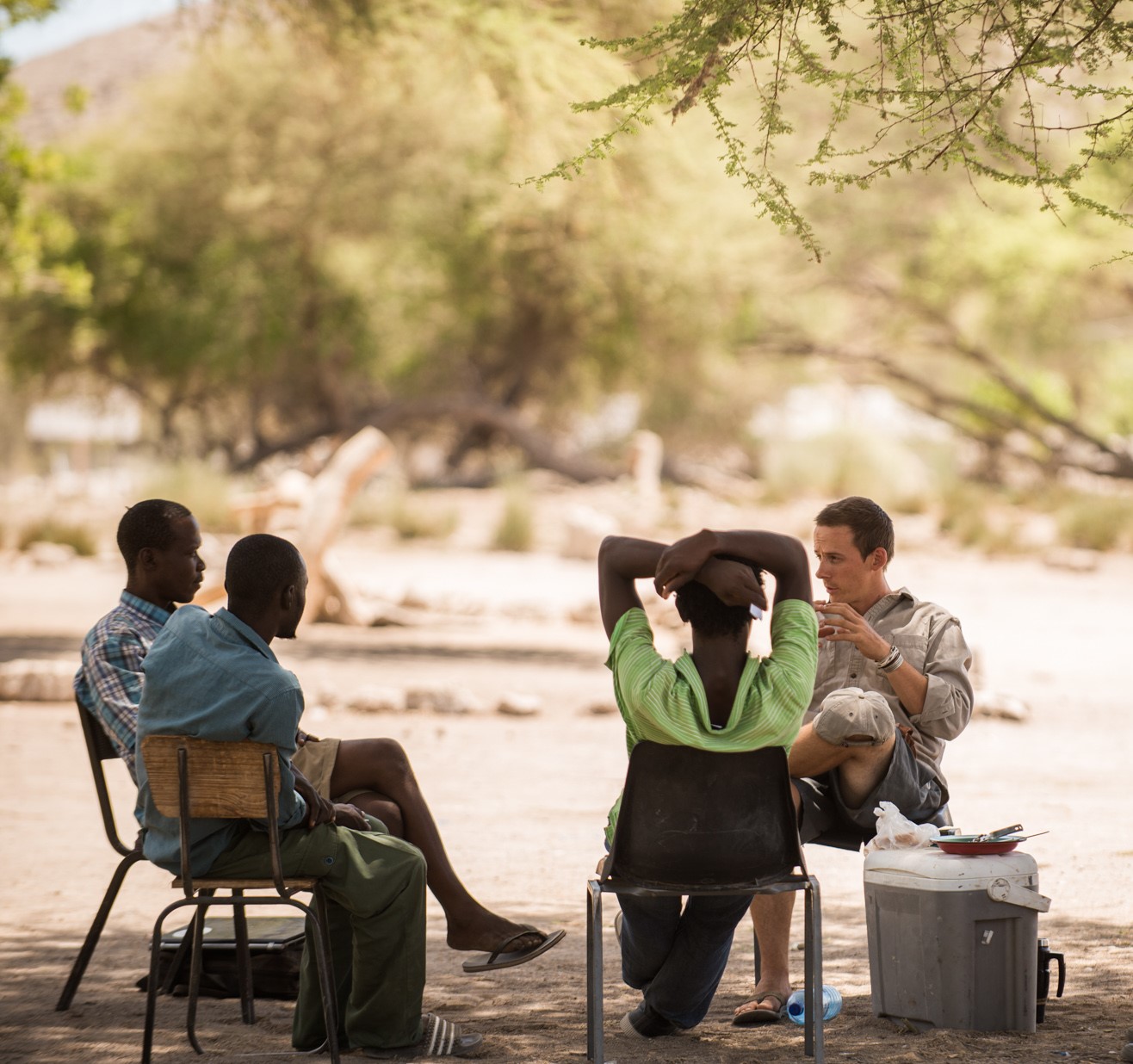
John discussing human-lion conflict challenges with community members in northwest Namibia.

In the run-up to World Lion Day, Lion Ranger Co-Founder Dr. John Heydinger sat-down (virtually) with students from the International Youth Geographic Association, to answer questions about working at the intersection of human-lion conflict in northwest Namibia. You can read the interview here. Thanks to the interested students for their thoughtful questions and helping spread the word on the Lion Rangers program.