Collaring in Hobatere

MEFT staff and the Lion Rangers, collaring a lioness in the rugged hills of Hobatere Concession, October 2021.

Over the past week, the Lion Rangers from Ehi-rovipuka, #Khoadi-//Hôas, and Omatendeka conservancies have been assisting Ministry of Environment, Forestry and Tourism (MEFT) game capture and Etosha veterinary staff, to collar lion in the Hobatere Concession area. Because lions move freely, in-and-out of the concession, lions often residing in Hobatere can also cause potential human-lion conflict on neighboring communal lands. In total five lions were fitted with satellite-GPS and Early-Warning collars – data are already incoming.

Continue reading →

Lion Ranger First Aid Training

The Ehi-rovipuka Lion Rangers proudly showing-off their new First Aid certificates.

Over the past week, the Lion Rangers from all eleven core lion-range conservancies joined together at Wêreldsend Environmental Centre in the Palmwag Concession to participate in First Aid training. Requested by Namibia’s Ministry of Health and Social Services, and by the Ranger’s themselves earlier this year, this training focused on ensuring the Rangers are equipped and knowledgeable around potential injuries and environmental illnesses they can encounter in the field. This also makes Rangers greater assets to their communities, particularly farmers and their families living far from definitive care at clinics and hospitals.

Continue reading →

Etosha Research Paper

Lions in Etosha. Image credit.

New historical research by Lion Ranger program co-founder John Heydinger examines the role of the apartheid state in the formation of Etosha National Park. This research, published by the South African Historical Journal, is available online, as part of the special issue: At the Edge of the Anthropocene: Crossing Borders in Southern African Environmental History. You can read Heydinger’s entire article here.

Continue reading →

World Lion Day, 2021

Desert-adapted lion cubs near Ombonde

August 10 is World Lion Day, which is recognized as a day to focus on the conservation of African lions.

The Lion Rangers are privileged to be counted among Africa’s and Namibia’s leading lion conservation organizations. But working on communal land, we are reminded everyday that lion conservation in northwest Namibia is a communal and team effort.

Continue reading →

Short Interview with John

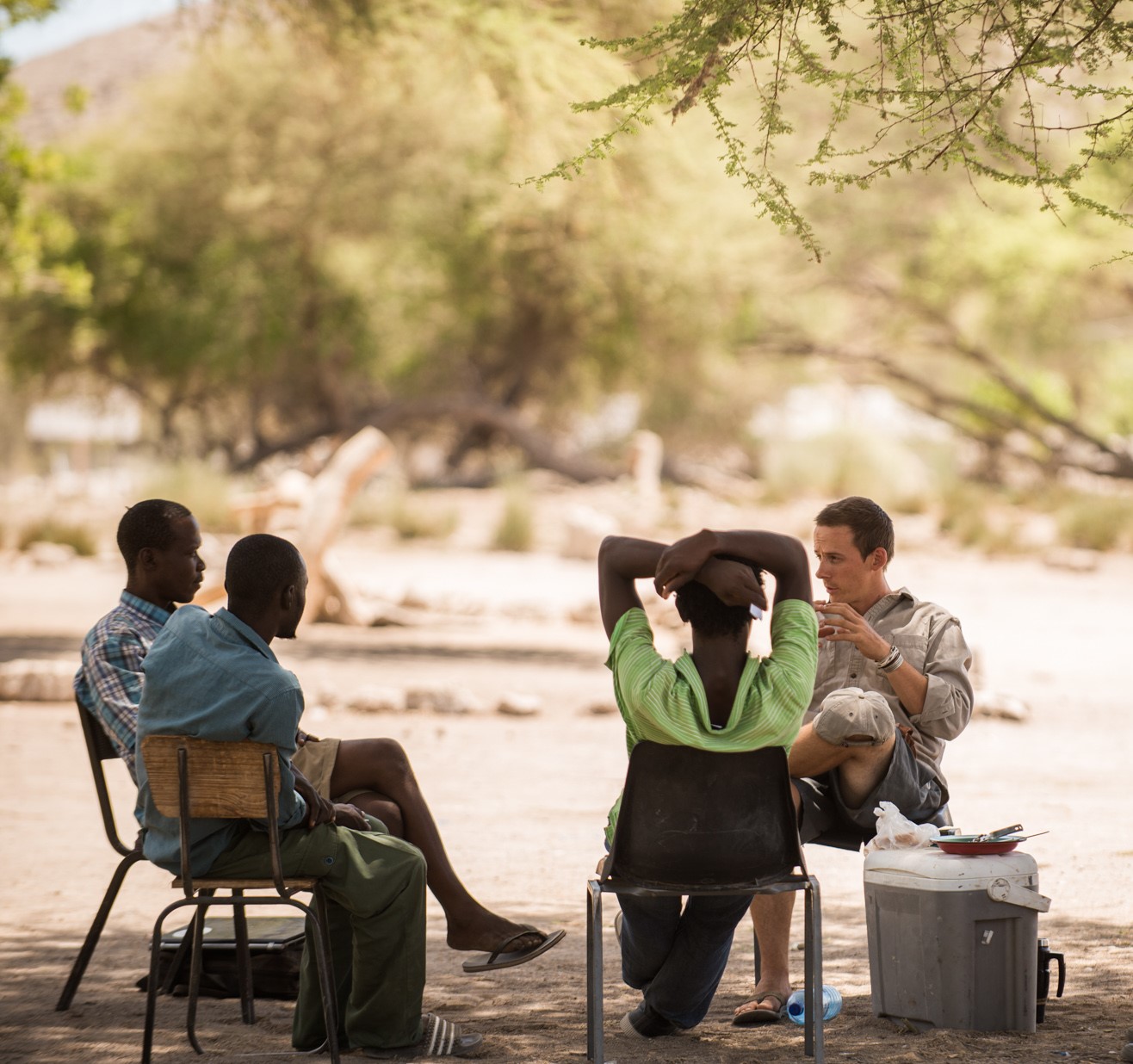
John discussing human-lion conflict challenges with community members in northwest Namibia.

In the run-up to World Lion Day, Lion Ranger Co-Founder Dr. John Heydinger sat-down (virtually) with students from the International Youth Geographic Association, to answer questions about working at the intersection of human-lion conflict in northwest Namibia. You can read the interview here. Thanks to the interested students for their thoughtful questions and helping spread the word on the Lion Rangers program.

Human-Lion Conflict in ≠Khoadi //Hoas

Collared desert-adapted lioness near Ombonde research area.

Over the past week, a group of lions invaded a farm at Anker in the ≠Khoadi //Hoas Conservancy. Over two nights these lions destroyed 76 goats and sheep. Thankfully, there were no human injuries. During the ordeal ≠Khoadi //Hoas Lion Rangers worked in partnership with field staff from the Namibian Lion Trust to ensure human safety and attempt to move the lions out of the area. Unfortunately on the second night the lions returned while the Rangers were absent, leading to the widespread livestock death. A full write-up is available in The Namibian newspaper online.

Continue reading →

Camera Trap Project

Camera trap image of collared male lion near Ombonde research area.

Beginning in mid-May, the Lion Rangers have been deploying trail cameras near the Ombonde research area to assess the local lion population. This research, led by Dr. John Heydinger of the University of Minnesota, is being performed under the supervision of, and in partnership with the Ministry of Environment, Forestry and Tourism (MEFT), and has been authorized by the Namibia National Commission on Research Science and Technology (NCRST). This camera trap project is part of an ongoing effort to learn more about the crucial desert-adapted lion subpopulation inhabiting the broader Ombonde landscape.

Continue reading →

Assisting MEFT in Hobatere

Desert-adapted lioness near Ombonde research area.

Over the past week the Lion Rangers provided field and technical support to the Ministry of Environment, Forestry and Tourism (MEFT) within and along the border of the Hobatere Concession. Lions inhabiting the Hobatere Concession frequently move beyond concession boundaries to cause human-lion conflict (HLC) on adjoining lands. The Lion Rangers from Ehi-roviupuka and Lion Ranger Patrol Leader Jendery Tsaneb were requested by MEFT to help track lions in Hobatere so satellite and early-warning collars could be fitted to help limit HLC.

Continue reading →

Collaring in Ombonde Research Area

Male and female desert-adapted lions in Ombonde Research Area.

Partnering with MEFT Directorate of Scientific Services and game capture unit, over the past week the Lion Rangers have been undertaking an intensive collaring program in the Ombonde Research Area. Following the rapid assessment of northwest lions last week, MEFT management identified a high need for better collaring information of lions in Ombonde.

Continue reading →

Rapid Assessment of NW Lion Population

Cub desert-adapted lion, Ombonde Research Area.

On 10 May the Ministry of Environment, Forestry and Tourism (MEFT) commissioned a rapid assessment of the status and condition of the desert-adapted lion population. Spanning the central (north-to-south) part of the desert-adapted lion range, this rapid assessment is being undertaken by staff from MEFT, Desert Lion Conservation, Namibian Lion Trust, the Lion Rangers, and Integrated Rural Development and Nature Conservation (IRDNC) and is being supported by Tourism Supporting Conservation (TOSCO).

Teams of Lion Rangers are currently at work in the conservancies of Anabeb, Omatendeka, Sesfontein, and Torra, as well as Etendeka Concession, assessing the body condition of as many desert-adapted lions as possible, as well as available prey and rainfall information to make proactive decisions about the lion population of northwest Namibia. This is in addition to the ongoing work of the Lion Rangers which is still underway.

Continue reading →