

This past week the Lion Rangers worked with staff from Namibia’s Ministry of Environment, Forestry and Tourism to translocate the problem-causing lioness OPL-30 away from trouble. For the previous week-plus this lioness, who forms part of the Etendeka pride, had been raiding goats near the Persianer farming area of ||Khoadi-#Hoas Conservancy. While the farmers were understandably upset and more than a little frightened of the lioness in the area, they showed immense patience, allowing Lion Rangers Richo Eisab (Sorris-Sorris) AJ Hareb (||Khoadi-#Hoas), and Riphelvius Saneb (Torra) to work to track the lion while the Lion Rangers Program and MEFT organized for her movement. To facilitate the operation the Ranger Program called in Southern Patrol Leader Benjamin Kordom (Doro !Nawas), who spearheaded the conflict mitigation operation.
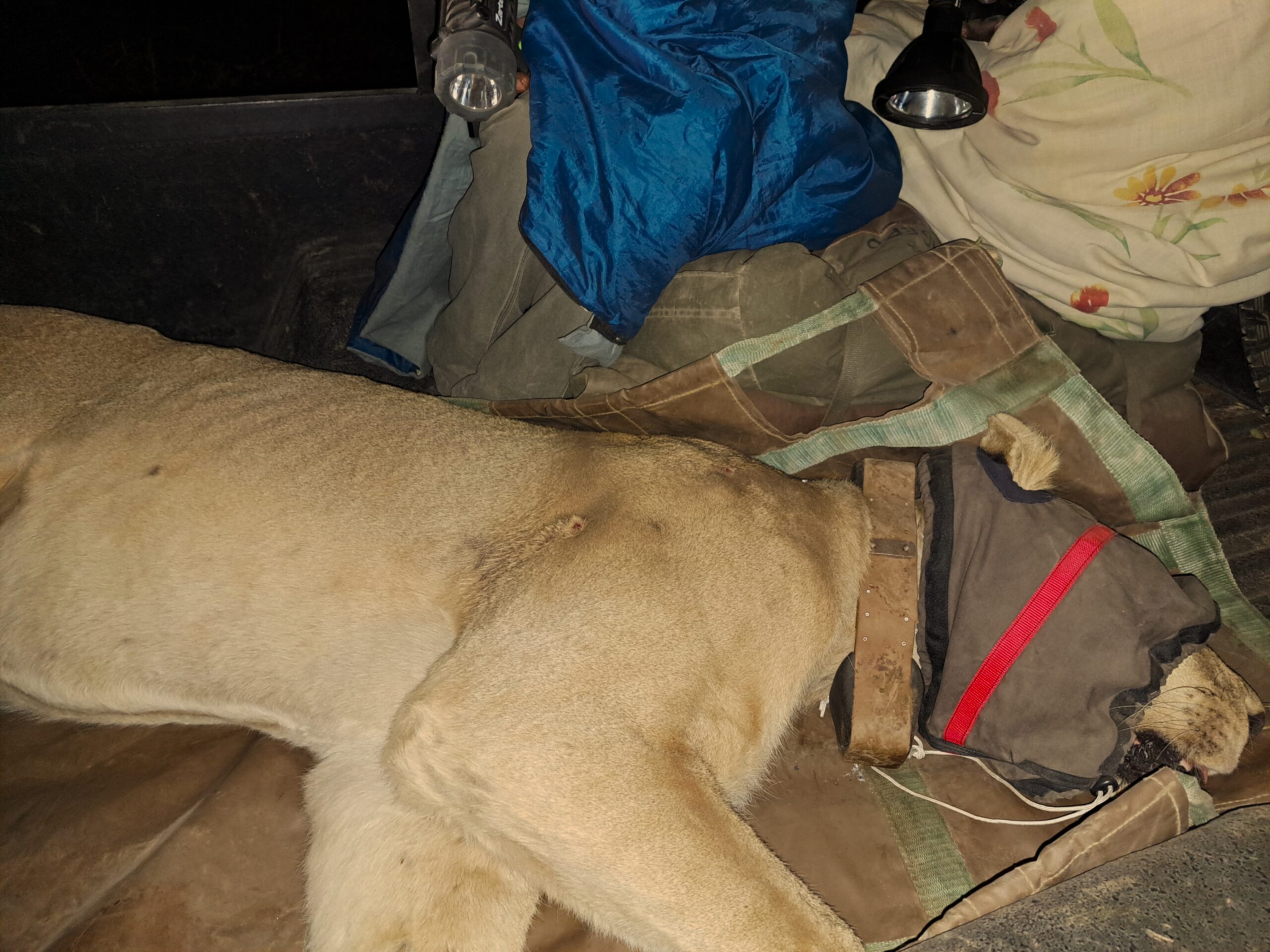
Over the night of 18-19 May, the Rangers, working with veterinarian Dr. HO Reuter and Lion Rangers Rapid Response Team Leader Uakumba Kapiringi were able to capture and safely translocate the lion to the nearby Palmwag Concession. In previous days our research team had scouted the area where springbok and mountain zebra were seen grazing in large numbers – in response to grass growing following the recent rainy season. Given the available prey in the area, and the presence of OPL-30’s sister OPL-16, it was decided the Concession was the most suitable place for a translocation.
The operation, which took place over approximately six hours during the night, was performed without incident and the lioness, monitored by our research team, was seen to make a full recovery from the translocation process.
While translocating lions is never easy, and never a first option, the Lion Rangers rely on a standardized decision-making process to assess the suitability of any lion for translocation away from trouble. Though the operation is time-consuming and expensive the Lion Rangers, in partnership with the Ministry of Environment, work to give problem-causing lions a second chance when the opportunity arises. We applaud the Ministry for its willingness to contribute staff time and resources to these operations to help secure the future of the desert-adapted lions.
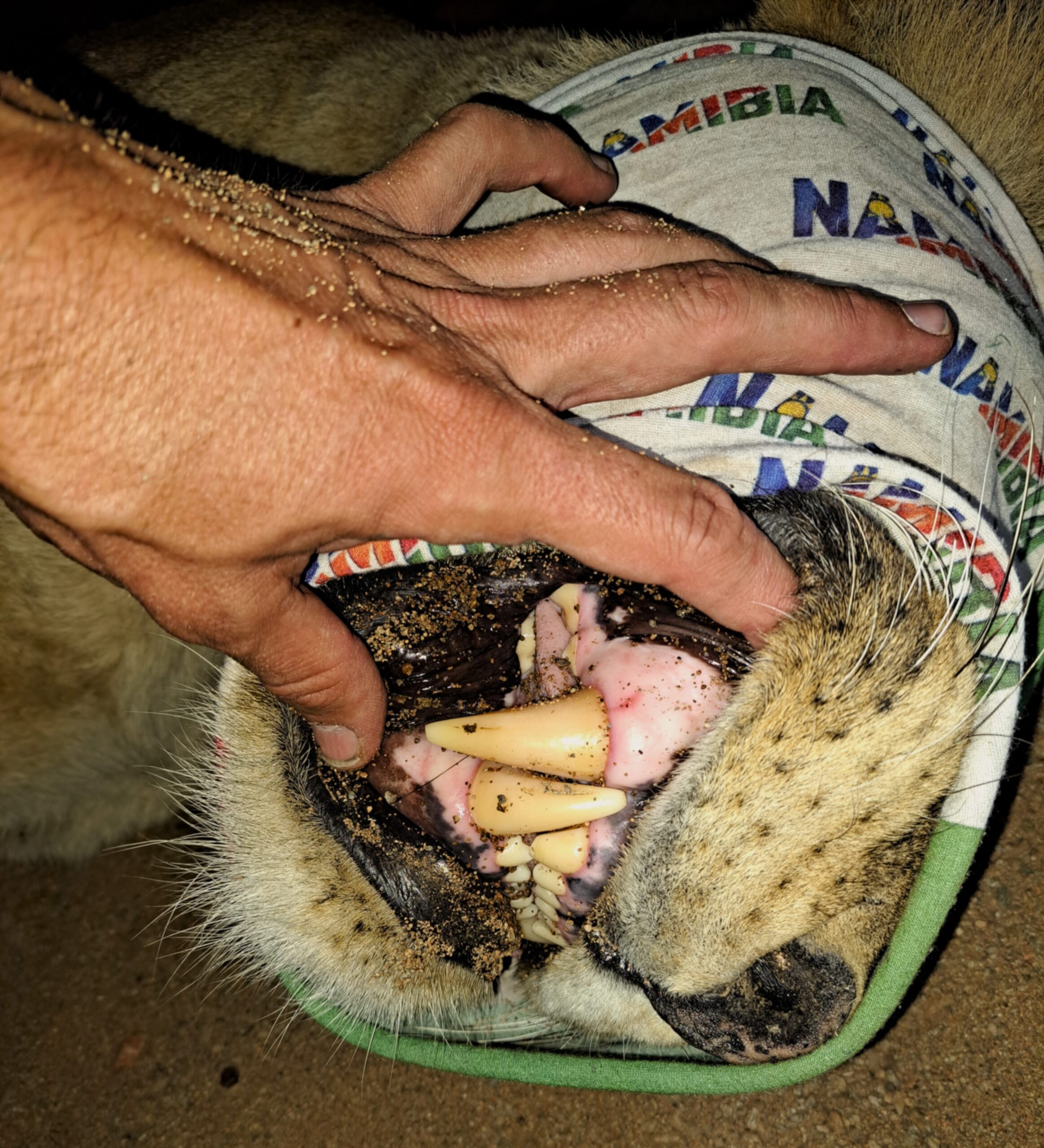
Update: though the translocation was performed successfully, the lioness has since returned to the farming area. This underscores the challenges with effective translocation, particularly within communal areas where suitable destinations are limited. The Lion Rangers continue to monitor the female in the area with Ministry staff and we continue to assess our operations to learn from successes and challenges to be more effective community conservationists.
