Researcher’s Report: Human-Lion Conflict

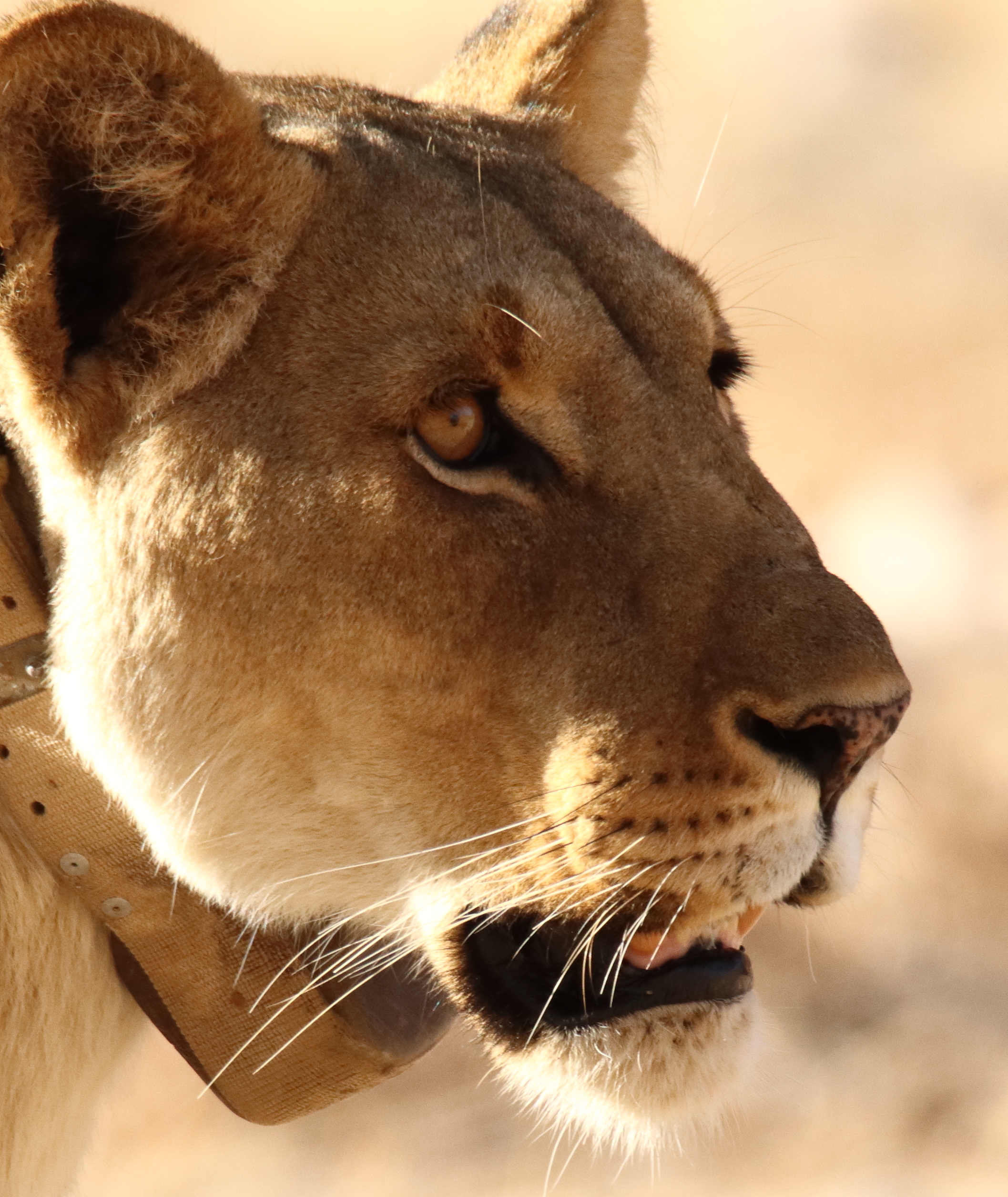
Lioness XPL-103, December 2022.

During the preceding months, a certain number of lion mortalities stemming from human-lion conflict have been recorded on communal lands in northwest Namibia. Critical examination of conflict incidents by researchers are yielding new insights into when, where, and seemingly why, lions come into conflict with farmers in northwest Namibia. Of particular note has been the role of the Lion Rangers in limiting conflict where Rangers are consistently deployed, and the need for upscaling the performance of the Rapid Response Teams. At its most broad, lion conflict appears to lead to lion mortalities when collared animals move into unfamiliar farming areas.

This short report has been provided to Namibia’s Ministry of Environment, Forestry and Tourism and can be downloaded here.
Translocation of OPL-24

OPL-24 in Torra Conservancy during reported conflict issues.

Following a series of human-lion conflict incidents in #Khoadi-||Hoas Conservancy, the decision was taken by researchers and Namibia’s Ministry of Environment, Forestry and Tourism to translocate the problem-causing lion, OPL-24 of the Uniab pride. This operation was performed safely during the nighttime hours of 5 February, 2024.

The translocation was done following the lion’s killing of one horse and two cattle near the Leeukop area during daytime hours. Rather than see the lion destroyed, MEFT staff and the Lion Rangers put forth considerable resources for this translocation – which was based on best available science, including guidelines set-forth by a 2022 publication by Becker et al. and an in-depth knowledge of lion movements and pride dynamics within the northwest lion population.

Continue reading →

Hobatere Cubs

The Hobatere pride has been growing in the past year-plus. Monitoring by the Lion Rangers and MEFT shows the pride consists of three adult females (OPL-6, OPL-9, and OPL-10), two adult males (OPL-19 and OPL-20) and no fewer than eight cubs. The oldest two cubs are the offspring of OPL-10 (“Nalaili), likely sired by the brothers OPL-7 and OPL-8, who departed Hobatere in about March 2022. Around that time OPL-19 and OPL-20 immigrated from Etosha and took over the pride. They have likely sired the remaining cubs.

Continue reading →

Northwest Lion Population Survey Overview

OPL-27, Omatendeka Conservancy

The Northwest Lion Population Survey took place from 6 November 2022 to 6 January 2023. This was the first comprehensive count of lions inhabiting northwest Namibia. An overview of the survey’s outcomes was recently published in an online version of the annual Conservation and Environment in Namibia magazine. This overview outlines the process and results of the survey. Highlights include the estimated northwest lion population of 57-60 adult individuals, and low density, estimated at 0.11 lions/100 sq. km.

The complete version is available here.

A full report of the Northwest Lion Population survey has been submitted to Namibia’s Ministry of Environment, Forestry and Tourism (MEFT) management for comment. It will be made available by MEFT in due course.

SMART Rangers

A Lion Ranger views a desert-adapted lion in the Kunene Region.

The Lion Rangers use cutting-edge mobile technology to keep an eye on the desert-adapted lions of northwest Namibia. In this year’s Conservation and the Environment in Namibia magazine, Lion Rangers Program Coordinator Mathilde Brassine explains how the Lion Rangers are using the Spatial Monitoring and Reporting Tool (SMART) to monitor lions and other large carnivores and help limit human-wildlife conflict.

A full version of the article is available here.

Get to Know the Desert-Adapted Lions

A member of the Omukutu pride

An important part of monitoring the desert-adapted lions is maintaining a near-comprehensive account of each individual in the population. As part of the recently-completed Northwest Lion Population Survey, the Lion Rangers and partnering researchers were able to identify and photograph what we consider to be each adult member of the population. (Of course, we keep working to identify other individuals.)

We are pleased to now include on this virtual space a comprehensive photographic account of each known individual composing the desert-adapted lion population. This roster will be updated as new information and photographic evidence becomes available. The ‘Desert-adapted Lions’ link and heading will remain at the top of this site going forward.

Lion Rangers Awarded

Lion Rangers Esau Matundu, Rinoveni Tjauira, Kaidue Uaroua, and Jackson Kavetu receiving their awards for top performance during the past year.

On 27 October, the Lion Rangers were proud to celebrate the dedication, commitment, hard work, and accomplishments of our top performing Rangers for the past year. Esau Matundu from TOSCO and Ehi-rovipuka Conservancy, Rinoveni Tjauira from the Namibia Lion Trust and Omatendeka Conservancy, Kaidue Uaroua from Ehi-rovipuka, and Jackson Kavetu from the Namibian Lion Trust and Ehi-rovipuka were all recognized at a special ceremony in ǂKhoadi-ǁHôas Conservancy. This event, hosted by the Community Conservation Fund of Namibia, in partnership with Namibia’s Ministry of Environment, Forestry and Tourism, not only recognized the work of these four, but the great strides by the Lion Rangers and other committed conservationists to ensure a future for the region’s wildlife.

Continue reading →

More Collaring to Limit Conflict

Lion Rangers Esau Matundu and Rinoveni Tjauira with John Heydinger, examining a lioness’ tooth wear during collaring in Etosha National Park.

Over the past two weeks the Lion Rangers, in partnership with MEFT Regional Services and Game Capture staff, collared six lions (one male and three females) along the boundary of Etosha National Park and within the communal areas of northwest Namibia. These operations, requested by MEFT, are an important part of continuing to limit human-lion conflict and secure the desert-adapted lion population.

Continue reading →

Collaring to Limit Conflict

Southern Anabeb pride, Anabeb Conservancy. Photo: Allu Uararavi

Over the past week, Lion Rangers from Anabeb, Doro !Nawas, Ehi-rovipuka, Omatendeka, and Torra conservancies joined forces to track and collar conflict-causing lions in Anabeb and Omatendeka conservancies. The lack of adequate rainfall this past year has pushed prey species into the mountains of Kunene, leaving lions and other large carnivores with limited prey options in many areas. This has led to a recent uptick in human-lion conflict (HLC). To support the livelihoods of rural communities and keep lions safe, the Lion Rangers and Ministry of Environment, Forestry and Tourism (MEFT) staff engaged in an emergency collaring operation. Additionally, in partnership with veterinarian Dr. Diethardt Rodenwoldt, the Research Team decided to translocate a conflict-causing male from a farming area in the ǂKhoadi-ǁHôas Conservancy.

Continue reading →