
OUR RESEARCH AND FIELD WORK
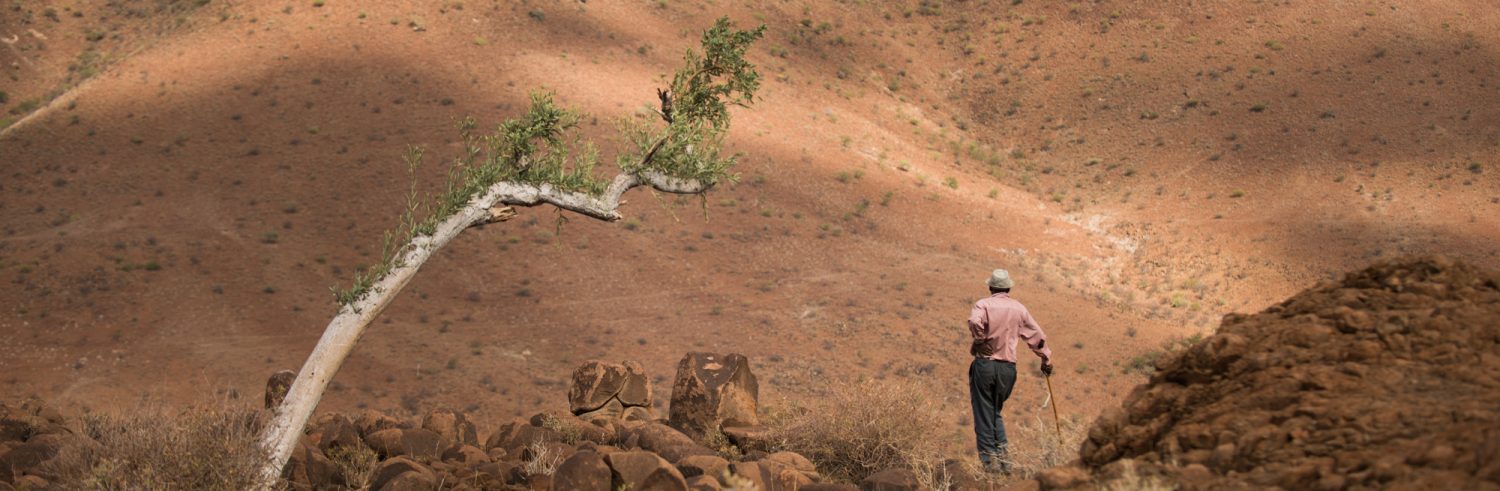
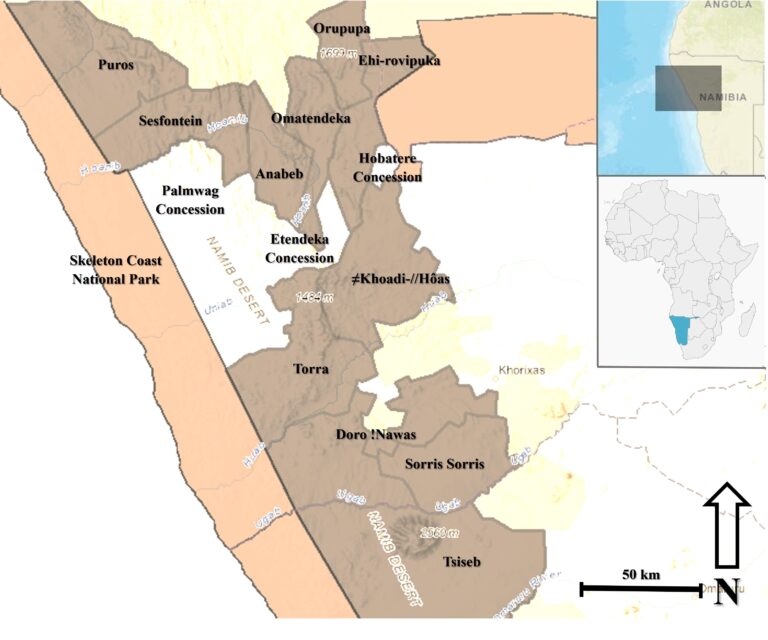
We perform research and human-lion conflict interventions to help communities and government in northwest Namibia more effectively manage the desert-adapted lions. How lions affect people, and the manner in which contact between people and lions occurs, is both a conservation and human livelihood concern. Our work is field-based, relying upon immersive techniques: only community-based outcomes will be sustainable.
Pastoralists in northwest Namibia are suffering from a hard-hitting drought. Effects of drought are complex, however, local pastoralists have particularly felt two, related effects. First is inadequate pasturage for livestock. Second are the increased threats posed by carnivores to people’s herds. Early in the drought wildlife conglomerated around waterpoints, likely leading to increased hunting success by carnivores. As the drought continued, wildlife numbers fell, though buoyed carnivore numbers remained inflated. As a result, carnivores turned their efforts towards locals’ livestock.
Residents are particularly concerned about the threats posed by the region’s population of desert-adapted lions. Though lions are not responsible for the majority of livestock losses, residents can be intolerant and fearful of lions when they are not supported to manage human-lion conflict.
COLLARING

Because lions in northwest Namibia move over a vast, unfenced, rugged landscape, monitoring their movements can be difficult. With the support of Namibia’s Ministry of Environment, Forestry and Tourism, the Lion Rangers work diligently to deploy GPS/satellite collars on all adult lions to monitor lion movements remotely. Once deployed and activated, GPS/satellite collars provide up-to-date lion locations to the Lion Rangers. This enables Lion Rangers and researchers to keep an eye on many lions, even from a distance.
TRAIL CAMERAS
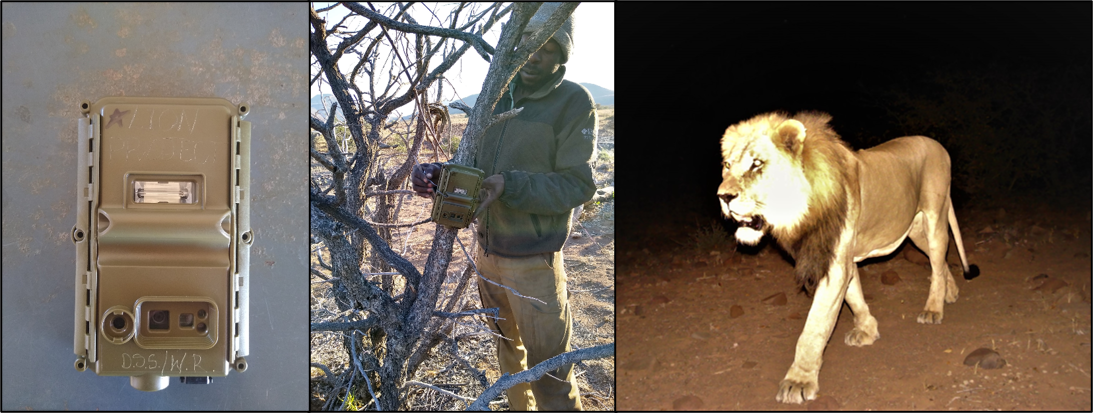
The desert-adapted lions of northwest Namibia are highly-mobile, and inhabit the far reaches of the landscape. Because they are primarily nocturnal, identifying individual, unknown lions, can be challenging. Additionally, lions can be wary around people, making identification and monitoring a challenge. Trail cameras, when they are deployed in key lion-range areas, such as around waterholes, provide the Lion Rangers with images when lions and other wildlife trigger the cameras. These images are used to identify unknown individuals, monitor wildlife movements, and check on animals’ body condition – among a variety of other uses.
TRACKING
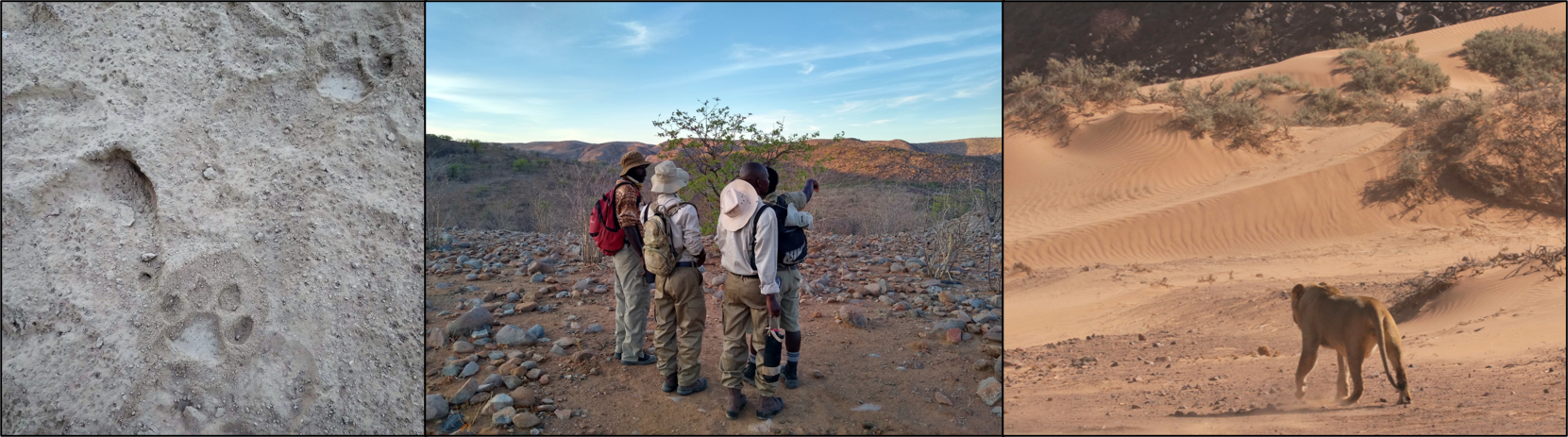
In the rugged Kunene Region, there is often no substitute for foot-based patrol, particularly into mountainous areas where vehicles cannot travel safely. Because lions, prey, and livestock can trek into remote, hard-to-reach areas, the Lion Rangers must do so as well. The Lion Rangers have a deep knowledge of their respective areas, performing fixed-route standardized patrols, and ad-hoc patrols as needed. The data collected from these patrols helps inform pastoralists, researchers, and conservationists about lion, prey, and livestock movements to limit human-lion conflict.
SMART
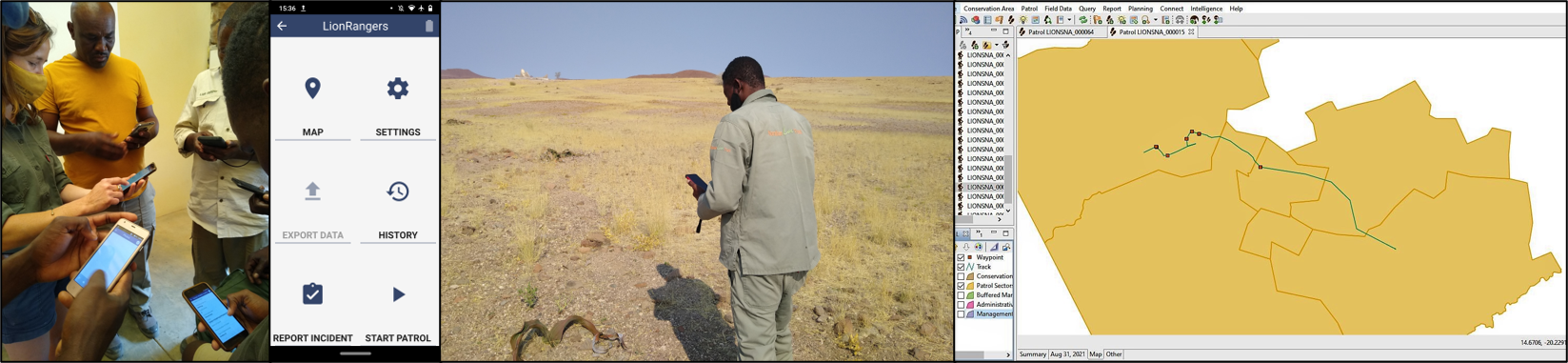
The Spatial Monitoring and Reporting Tool (SMART) is a cloud-based conservation-oriented platform for collecting, visualizing, storing, analyzing, and reporting on relevant wildlife data. The Lion Rangers are one organization pioneering the use of SMART in Namibia’s communal areas to improve the protection of wildlife and creating more transparent measures of conservation impact. Using mobile phones equipped with SMART, the Lion Rangers are able to record patrols and incidents in the field and feed this information to wildlife managers in real time. This is part of ensuring scientific monitoring and reporting on Ranger activities and lion movement in communal areas.
EARLY-WARNING SYSTEM
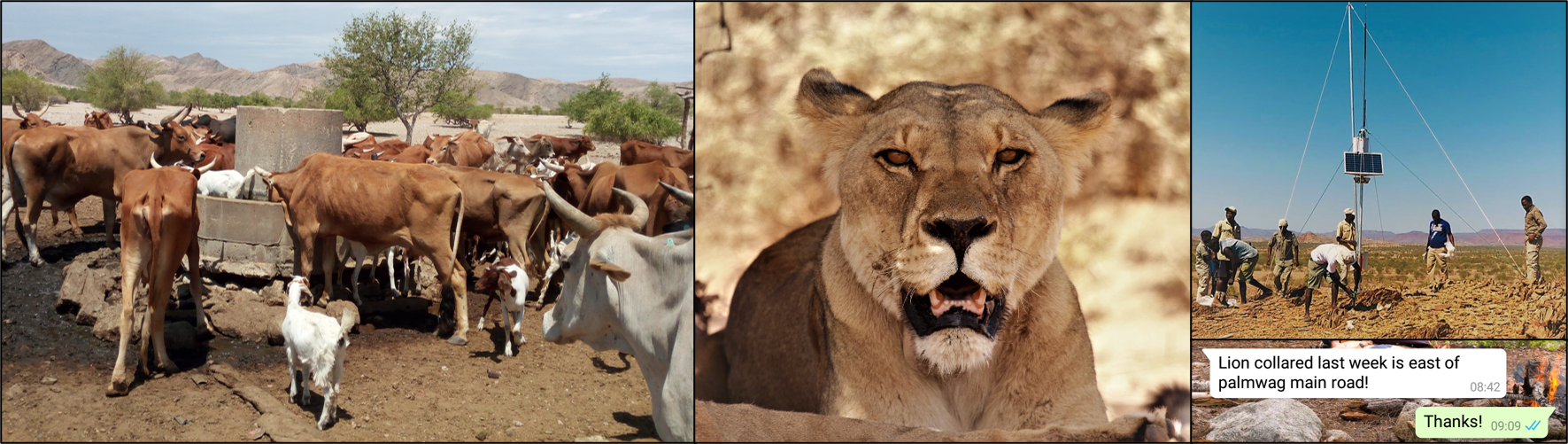
An innovative new system is helping keep inform farmers of lion movements, and limiting human-lion conflict. Lions fitted with collars are able to be tracked via satellite and through our Early-Warning system, which has been developed entirely at home in Namibia. At farms in known human-lion conflict areas, the Lion Rangers and program partners are erecting Early-Warning towers. Using computer software, these towers are constantly searching for nearby lion collars. When a collar comes close to a tower, farmers and the Lion Rangers are provided with SMS alerts detailing location information for that lion, and a series of lights and sirens alerts farmers to lion presence. This new system is engaging area farmers as active partners in limiting human-lion conflict.
Data collection is only the first part. We are developing locally-driven, appropriately-scaled solutions for local pastoralists without compromising the long-term viability of the region’s lions. The desert-adapted lions are a behaviorally unique population and thus present a unique set of problems for residents; meaningful progress in addressing human-lion conflict will be locally-driven and inclusive if it is to be successful. We are working closely with residents and advised by a knowledgeable interdisciplinary team of conservationists, both within Namibia and abroad.
Reports and peer-reviewed publications distill the information collected in the field, and via a variety of other research methods. We are keeping this space updated as new publications are released pertaining to lions and human-lion interactions in northwest Namibia.
PUBLICATIONS
JOURNAL ARTICLES/BOOK CHAPTERS
THESES
SUBMITTED PAPERS
BOOKS

REPORTS etc.
Lion Rangers 2023 Program Highlights
Lion Rangers Training and Operations Manual 2023
Lion Ranger 2019 Mid-Year Report
Stander, P. (2008) Tourism and the Conservation of Desert Lions in Namibia.
Stander, P. (2007) Behaviour-ecology and Conservation of desert-adapted Lions.
Stander, P. (2006) Population ecology & demography of Kunene Lions, January 2006.
