

During the past week, the Lion Rangers were visited by a delegation of community conservationists from the Omusati, Oshana, and Oshikoto regions. This exchange visit, motivated and supported by the Community Conservation Fund of Namibia (CCFN), served as a first point of contact to gauge the feasibility of expanding the Lion Ranger program to the communal areas north of Etosha National Park. Lions frequently leave the northern Etosha boundary to prey-upon pastoralists’ livestock, and are often killed as a result.
This year, Namibia’s Ministry of Environment, Forestry and Tourism (MEFT) is generating a national lion management plan, which will guide lion conservation across the country for the upcoming decade. Part of the approach being designed will focus on limiting human-lion conflict across lion range in Namibia. The initial success of the Lion Ranger program in Kunene suggests the possibility that a similar type of program can be implemented within other communal areas. However, the context of northern communal conservancies is very different: average rainfall is higher, human population density is greater, and there are few, if any, resident lion prides on within the northern communal areas. Yet, human-lion conflict is a pressing problem. The information sharing from the exchange visit allowed the Lion Rangers to share their experiences, and northern communal conservationists to share their experiences, around wildlife monitoring and human-lion conflict.
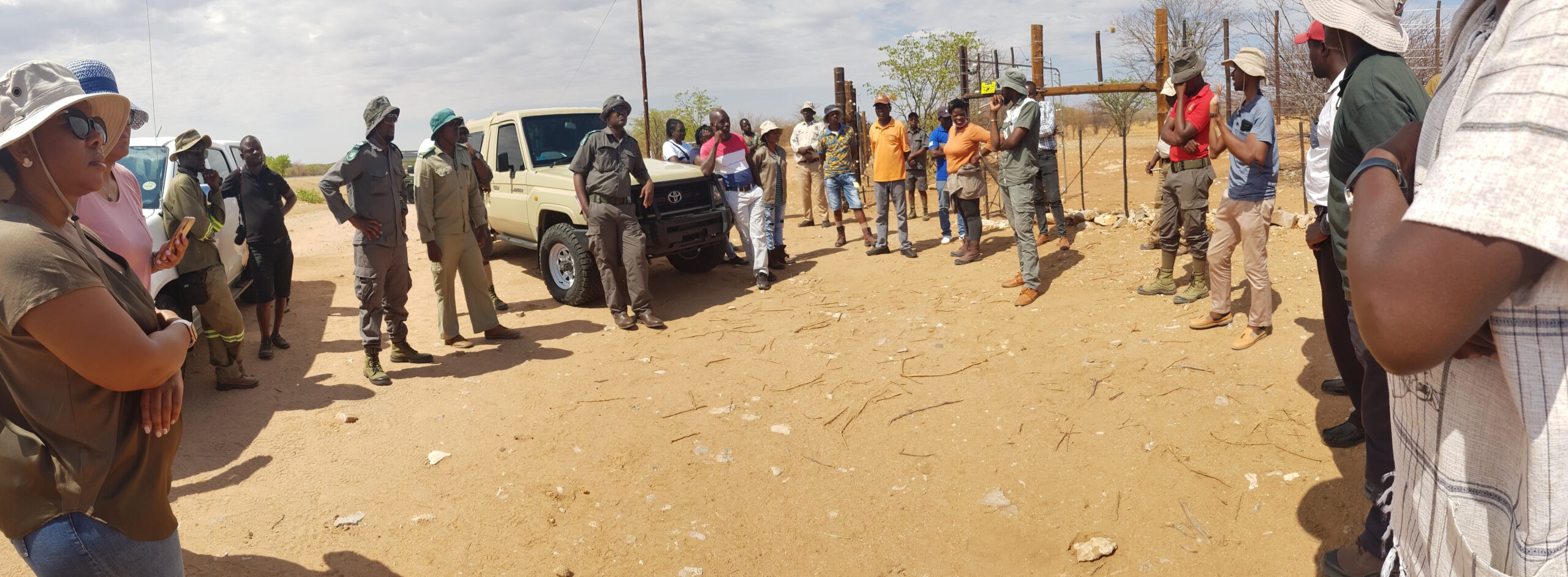
Following an introductory meeting in Kamanjab, the delegation did a joint inspection of the recently repaired Hobatere Concession fenceline. With support from KfW and CCFN, the Hobatere fence was repaired earlier this year, to limit lion incursions from the concession on to communal land. This can serve as a model for repairs to the northern Etosha fence.
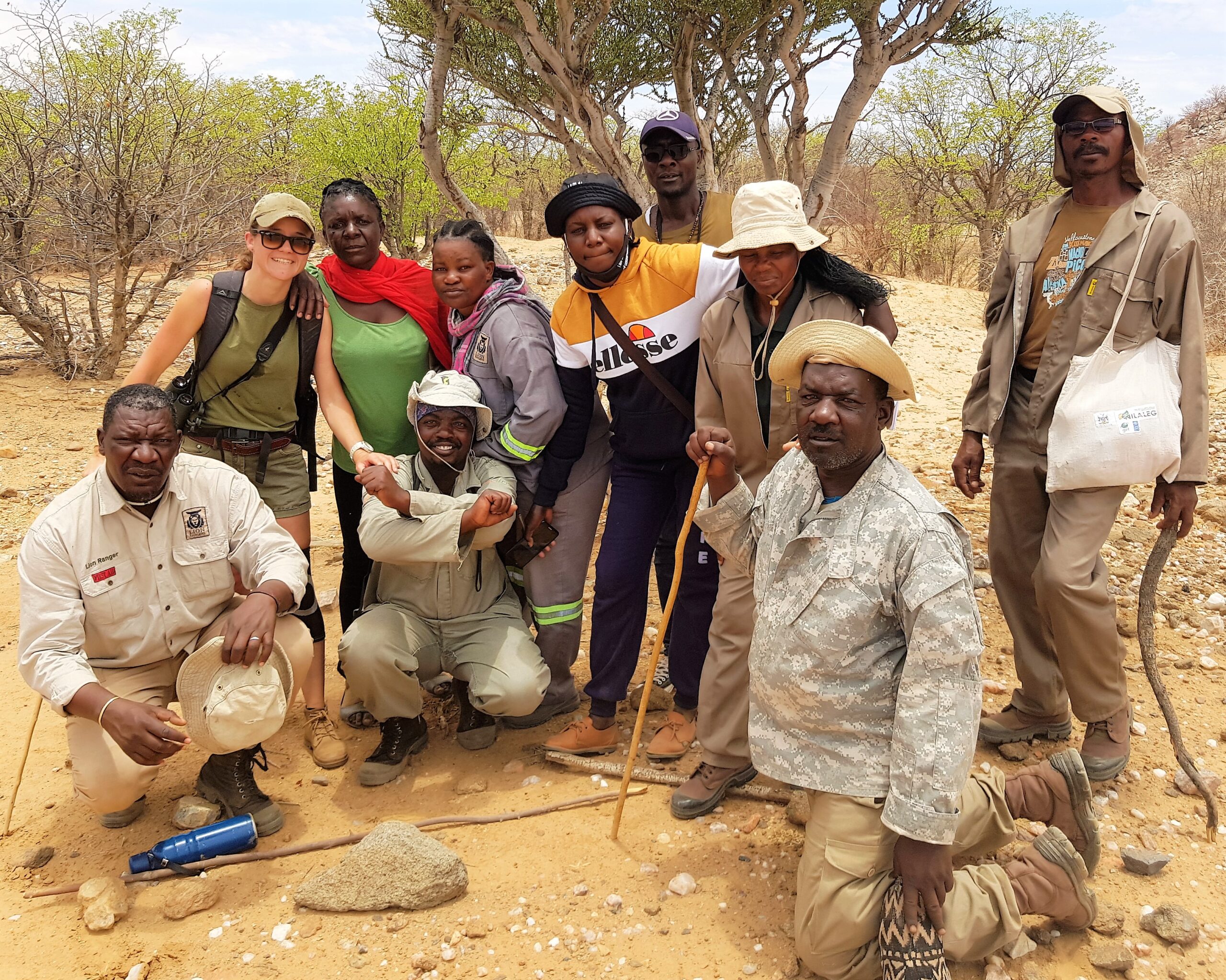
An important part of facilitating the information sharing is the on-the-ground work of the Lion Rangers. Since so much of our work is predicated on the Rangers and their performance in the field, it was important for our colleagues to understand what this work entails. For one morning of the exchange visit the Rangers showed-off their field knowledge and answered questions about Rangers’ roles and responsibilities, while performing a foot-based patrol.
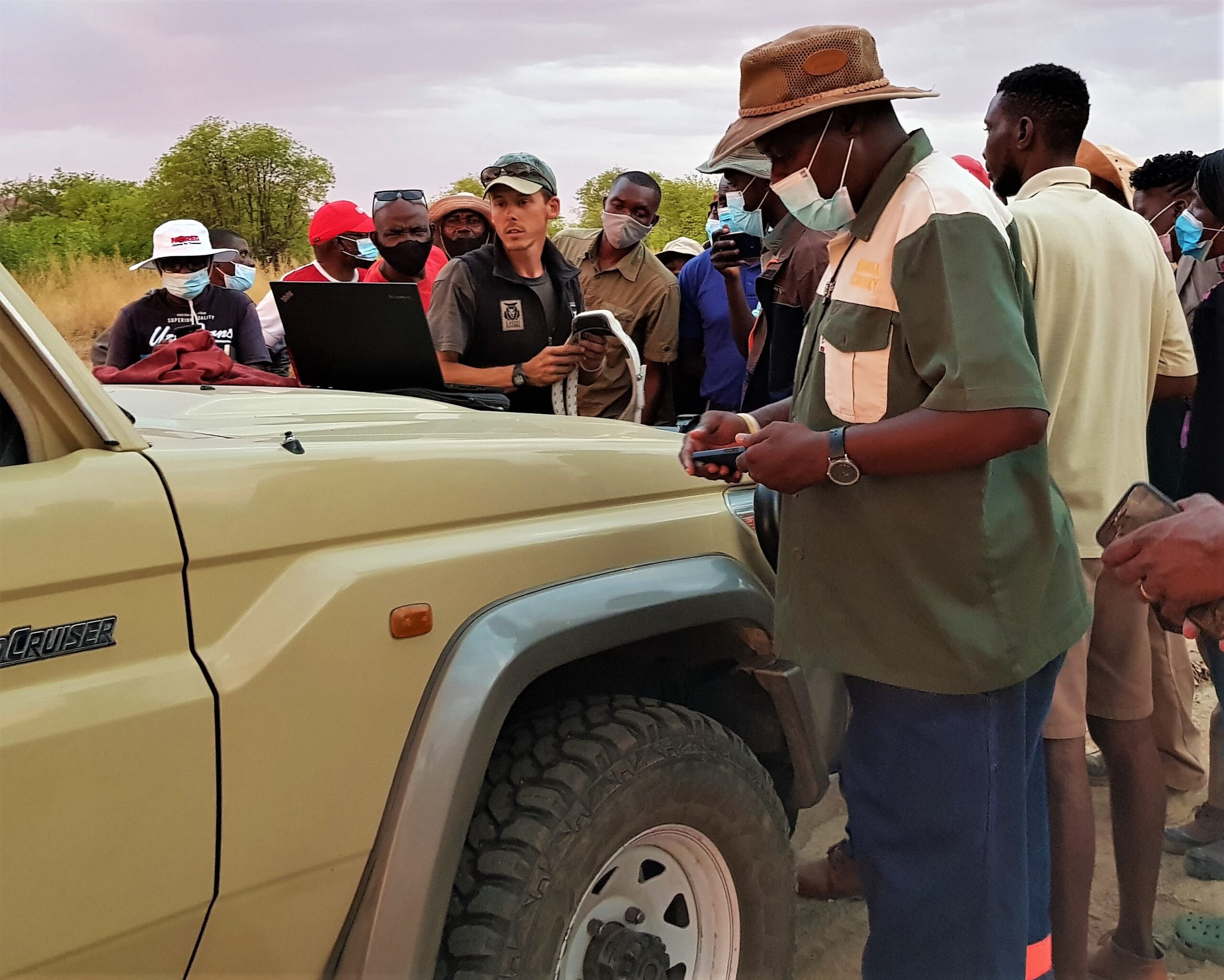
A highlight of the exchange visit was the replacement of collars in Hobatere Concession. A group of five resident lions, one of whom recently had cubs, was targeted and two collars were safely changed. This enabled the delegation to see lions up-close, and to understand how the early-warning system is functioning and assisting farmers in limiting human-lion conflict. A special thanks to Dr. Maaike de Schepper of Naankuse who performed the lion immobilization, checked vitals, and ensured the safe replacement of collars.
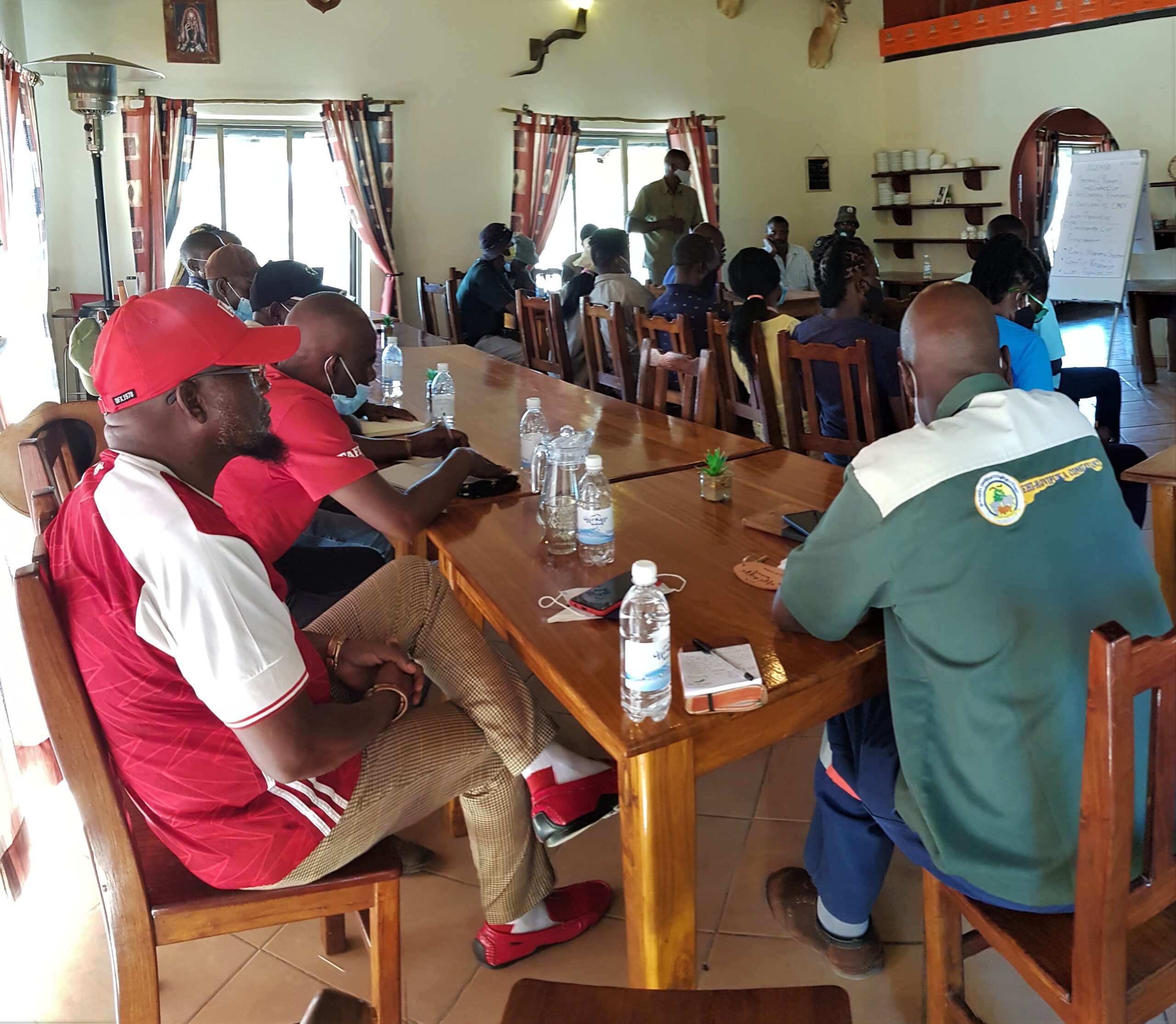
The exchange visit closed with positive impressions from both sides and a commitment to continue the conversations around limiting human-lion conflict in both landscape. Thanks to CCFN for supporting the meeting, and for MEFT-Directorate of Scientific Services, and regional services Omusati for facilitating the meeting.
